
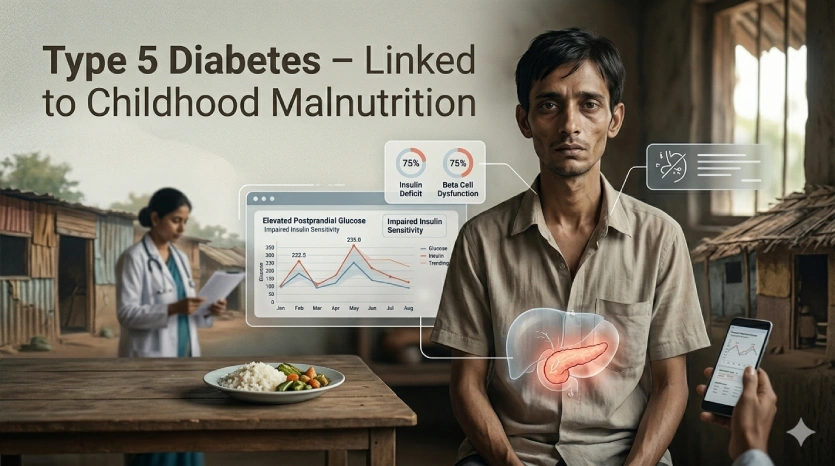
Scientists have discovered a new type of diabetes that results from inadequate nutrition during early developmental periods in childhood and adolescence. It is categorized as type 5 diabetes, characterized by damage to pancreatic beta cells that fail to produce adequate insulin. In April 2025, the IDF (International Diabetes Federation) recognized this type, which had long been underdiagnosed. The main target for this type is undernourished individuals in low- and middle-income countries, in regions like Asia and Africa. In-depth research has found that up to 25 million people worldwide may be affected by type 5 diabetes.
These diseases were first discovered in 2025, in a population with a history of childhood malnutrition. Thus, researchers on type 5 diabetes further confirmed that these patients did not fit neatly into the type 1 or type 2 categories. Initially, it was malnutrition-related diabetes mellitus (MRDM ) or J-type diabetes. In 2026, April, after years of research and study, the International Diabetes Federation formally recognized type 5 as a distinct category. Moreover, this blog explores type 5 diabetes, including its symptoms, causes, and treatment plans.
What is Type 5 Diabetes?
Type 5 diabetes, officially recognized in April 2026 by IDF as a distinctive category, is linked directly to childhood malnutrition, unlike type 1, which is caused by autoimmune destruction of insulin-producing cells. Or type 2, which is developed due to insulin resistance, often tied to obesity and lifestyle choices. Type 5 arises from irreversible pancreatic damage due to malnutrition, affecting individuals with poor health. That often lacks a supply of 2 meals a day and nutrition-based meals, reflecting the country’s poor situation.
This problem remained unclassified for many years and was known as malnutrition-induced diabetes mellitus (MRDM) or J-type diabetes. People were wrongly diagnosed as suffering from type 1 or type 2 diabetes and were administered improper medications. For instance:
- Misdiagnosis of Type 1 Diabetes Mellitus: Patients received high amounts of insulin injections that their bodies could not tolerate.
- Misdiagnosis of Type 2 Diabetes Mellitus: Patients were told to lose weight, among other things, which could not help in any way due to a damaged pancreas.
With the identification of type 5 diabetes, the classification allows this kind of disorder to have a unique identity within medicine. This is beneficial because medical professionals will be able to set their own criteria for diagnosing this disease and provide appropriate treatment to patients, especially in developing countries, where the risk of malnutrition in children is higher.
Causes, Symptoms, Diagnosis, Treatment Plan, and Prevention
Type 5 diabetes is unique as it stems from childhood malnutrition that damages the pancreas during critical developmental years of individuals. Damaging the insulin production capacity, resulting in diabetes later in life. Therefore, understanding it thoroughly helps in the process that follows.
Causes
- Severe undernutrition from childhood to adolescence can impair pancreatic growth, which is later diagnosed as type 5 diabetes.
- Long-term metabolic effects are caused by nutrient deficiency.
- The chances of it increase in low- and middle-income countries.
Symptoms
The common symptoms of it are pretty much similar to those of type 1 and type 2 diabetes. However, it typically appears in adolescents and young adults, such as:
- Tremendous weight loss
- Excessive thirst
- Urination rounds frequently
- Fatigue
- Elevated glucose levels
Additionally, you can also notice that patients with type 5 diabetes often have a body mass index (BMI) below 19 kg/m². In addition, it does not show signs of autoimmune β-cell destruction, making it different from type 1 diabetes.
Diagnosis
As mentioned in the blog, the type is not officially recognized by the IDF, which means it lacks any structured diagnostic procedure. Because no studies or research have been done in this field. However, recent recognition has set the foundation for researchers and clinical diagnosis procedures.
This will also save those patients from historic repetitions of misdiagnosis, which have been made by many. Previously, many patients have been diagnosed with type 1 or 2 diabetes, which in reality was type 5. That causes misalignment with treatment, which did not meet their specific needs.
Treatment Plan
Proper treatment plans are still under discussion. However, research currently suggests that it requires context-specific strategies in resource-poor settings. It follows that for type 5 diabetes, treatment must focus on addressing nutritional defects, not only on glucose. The treatment plan must include the management of this condition, which may include:
- Correct Nutrition support to manage the long-term undernutrition
- Oral diabetes medications for stimulation of insulin secretion
- Low-dose insulin therapy, where appropriate.
Additionally, ensure not to take the medication and the treatment plan made for treating type 1 or type 2 diabetes. Because it will not be effective, as the root cause here is insulin deficiency linked to undernutrition. Treatment, though, requires a tailored plan because several cases of misdiagnosis result in serious issues. Including nerve damage, kidney issues, and vision problems, your life expectancy is also reduced significantly if the diagnosis and treatment are not accurate.
| Approach | Details |
|---|---|
| Insulin Therapy | Carefully tailored doses; not as high as type 1 protocols. |
| Nutritional Rehabilitation | Balanced diet plans to support pancreatic function and overall health. |
| Monitoring | Regular glucose checks to prevent complications |
| Avoid Misdiagnosis | Correct classification prevents harmful over- or under-treatment. |
Prevention
- It helps childhood nutrition programs reduce malnutrition rates and the incidence of type 5 diabetes.
- As far as the government is concerned, there should be health programs to address the needs of the vulnerable population.
- Screening should take place in communities with higher rates of malnutrition.
- Education for doctors regarding the earlier detection of type 5, in addition to educating the general population about such issues.
Concluding Here!
Type 5 diabetes is common among individuals who lack the capability to derive energy from the food they consume. Type 1 is one of the autoimmune diseases that damages the pancreas to the extent that it cannot generate any insulin. Type 2, on the other hand, results from insulin resistance as well as beta-cell dysfunction. Amidst the two mentioned types, it was discovered that there is a new form of diabetes known as type 5. The recognition by the IDF occurred in April, meaning research on it could begin in earnest now.
The disease sheds light on how poverty affects health and outcomes, particularly for those whose genetics have been impacted by it. Families that have been relocated from resource-poor environments to higher-income nations are likewise at risk. It must be addressed on both national and global levels. The IDF’s acknowledgment represents a significant milestone towards type 5 diabetes diagnosis, treatment, and awareness of type 5 diabetes, which will save lives.
FAQs
Are type 5 diabetes and type 4 diabetes the same thing?
No, they are not alike. They are different because Number 4 remains disputed among experts and is associated with aging and undernutrition. However, the type 5 has now been acknowledged by the IDF as of April 2026.
Who is at a higher risk of developing type 5 diabetes?
People who suffered extreme malnutrition during their youth and teenage years are at a higher risk. Mostly prevalent in developing countries, where undernutrition remains common.
What are some symptoms of type 5 diabetes?
Symptoms are similar to those of types 1 and 2 diabetes, including:
- Fatigue and weakness
- Frequent urination and thirst
- Impaired vision
- Delayed wound healing
Due to similarities in symptoms between types 1 and 2. There has always been a history of misdiagnosis.
Why is recognition from the International Diabetes Federation essential?
The official recognition is essential, as it promotes accurate diagnosis and treatment. Global awareness of malnutrition’s long-term impact, policy changes to prioritize nutrition programs, and research momentum advance better therapies and prevention measures.
What’s the diagnostic procedure for type 5 diabetes?
The diagnosis process includes:
- Reviewing the patient history for the child’s malnutrition
- Blood glucose tests, such as fasting glucose, HbA1c, etc
- Insulin production assessment (C-peptide levels)
- Differentiating between type 1 and type 2 based on context and pancreatic function.