
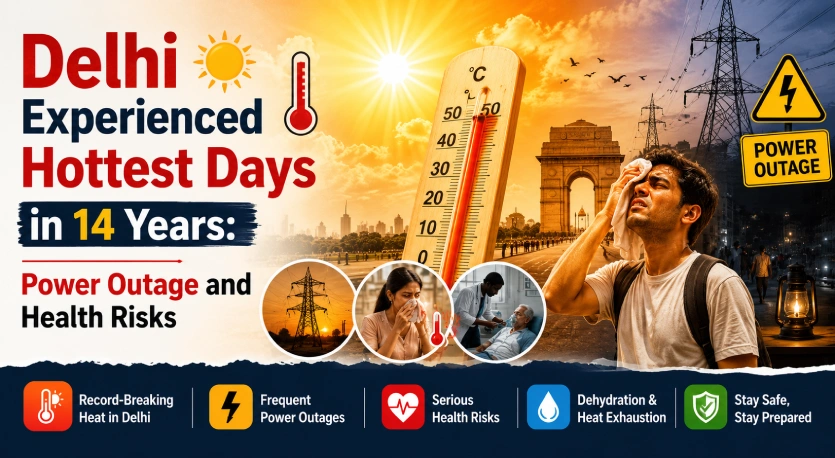
heatwaves are hitting hard in the north-central part of India, with temperatures rising as summer is at its peak. In May, Delhi experienced more than it ever had in the last 14 years, breaking records and reaching a temperature of 46.5°C. These temperature rises are triggering major emergencies that affect people’s lives and pushing people to make changes in their lifestyles. Starting this week, as temperatures are scorching, Tuesday sees the highest temperature, and with it, power outages are reported, prompting complaints from people.
The IMD has raised an Orange alert for the week and warned that it’s not going to get any better. Until 26, temperatures rise, and heat waves, along with afternoon winds and storms, are expected. Whether the situation will get better or worse can only be decided as the days unfold, but with alertness, we can better prepare for it. From hydration to staying indoors, taking ORS, and seeking medical attention when feeling discomfort are all we can do.
Meanwhile, through this guide, you can understand the situation in the Delhi region, including Noida and Gautam Budh Nagar. Heatwave alert: what are the experts saying for the next few days?
Power Demand Surges Beyond 8000 MW
The summer months usually require high-voltage power to operate due to large cooling systems running in households, offices, and commercial establishments. Delhi, being the central hub, has reached an unprecedented level this summer, with the 8000 MW mark reached in May alone. As per historical data, these are the statistics over the years:
| Year | June Peak Demand (MW) | July Peak Demand (MW) | Notes |
|---|---|---|---|
| 2018 | 6,600 MW | 6,800 MW | First time crossing the 6,500 MW mark |
| 2019 | 7,000 MW | 7,200 MW | Demand rose due to the extended heatwave |
| 2020 | 6,200 MW | 6,400 MW | Lower due to COVID lockdowns |
| 2021 | 6,900 MW | 7,100 MW | Return to pre-pandemic levels |
| 2022 | 7,500 MW | 7,700 MW | Consistently high due to the long summer |
| 2023 | 7,800 MW | 7,900 MW | Nearing 8,000 MW threshold |
| 2024 | 8,050 MW | 8,100 MW | First time crossing 8,000 MW |
| 2025 | 8,200 MW | 8,300 MW | Record-breaking demand amid a severe heatwave |
The factor that might have influenced this surge is the following:
1. Cooling Load
Air-conditioners and air coolers contribute significantly towards the surge, particularly during evenings when both domestic and commercial usage overlap. Due to the temperature hitting high and high, the humidity increases in the evening it gets specifically worse. Therefore, on Wednesday, around 3:45 p.m., these power requirements reach 8000 MV. The frequent power cut has also been experienced over the past few days
2. Infrastructure Strain
The stress on the grid is increasing as the areas’ demand for power surges. This poses a threat to possible voltage dips and even local blackouts, as stated by the State Load Dispatch Center (SLDC). Delhi, being the capital, is going to experience even greater temperature rises and will require more power to operate its large cooling systems continuously.
3. Historical Context
Even though Delhi typically sees higher demand during June-July, current demand is already surpassing the mark in May alone. Because in the previous year the need for this much power was certain in June and July, now it’s only May, and we are experiencing this high demand.
4. Future Projection on the Condition
As per the forecast by IMD regarding sustained high temperatures, the demand will continue to be high. As the upcoming weeks and months are the summer months, the temperature is nowhere near expected to go down. In contrast, there are changes that will increase, causing disruptions in citizens’ daily lives.
Daily Life Disrupted From Farmers, Children to Office Workers
Due to the intense heat, the roads are now empty, and even farmers have started working at night to avoid the scorching heat. The Indian Meteorological Department has issued an orange alert and stated that it’s going to be worse than loo. Hospitals have started their preparation to ready their emergency staff for emergencies, and some have even begun reporting sporadic cases of heat-related illnesses. Let’s see how it has affected different people and professions:
1. Farmers
Their work has been adversely affected by this rise in temperature. Many farmers are working through the night due to this temperature increase. Their routine and work output have been affected by this change.
2. Children
Age groups, specifically the younger age group, are the most vulnerable ones. They have been kept away from schools, while school recesses are limited. Additionally, the warm nights affect the sleeping patterns of young ones.
3. Office Workers
Office workers find it difficult both at home and at work due to high temperatures. The power demands result in voltage fluctuation and power breakdowns. It has also made commuting difficult.
Health Consequences and Hospital Response
Due to the heat wave, Delhi’s healthcare facilities are strained by a rise in heat-related illness cases. Many have started preparing earlier, creating a dedicated team to deal with patients presenting with dehydration, heat exhaustion, and heat stroke. Here is what the medical facilities are facing issues due to the surging temperature:
1. Increase in Patient Admissions
Hospitals report an increase in patient admissions associated with excessive exposure to extreme heat. Elderly people, children, and people who work outdoors are especially prone.
2. Advice from Doctors
Doctors advise everyone to minimize exposure to the sun by staying indoors during hot hours, drinking water, and avoiding any strenuous activities. It is noted that even a brief contact with “loo” wind causes serious health problems.
3. Preparing for an Increase in Admissions
Hospitals arrange additional staffing to handle patient overload and provide cooling for the premises. Also, preventative measures are being taken to inform people about the signs of heat-related illness.
4. Additional Problem – Hot Nights
Due to record-breaking night temperatures, there is no way to recover overnight. As a result, people become more tired and vulnerable. This situation demonstrates the connection between weather extremes and public health crises.
Final Words!
The summers are at their extreme, especially this week. It’s important to be protected, with every situation indicating caution. Temperatures have been rising rapidly, leading to power outages and heat waves that are affecting people’s daily activities. Schools within the Delhi-NCR zone have declared early summer holidays, and office work has shifted from working within the office premises to working from home. These rises have been evident in the past few days, with high temperatures and no relief from conditions.
This week and the upcoming one could be very hot according to the IMD, so we need to prepare ourselves for whatever comes. Avoid the afternoon sun, seek medical guidance when in discomfort, and stay indoors as much as possible.
FAQs
Explain what the IMD “Orange Alert” means for residents of Delhi?
A heatwave of great intensity and danger is indicated by an orange alert, causing heatstroke and heat exhaustion among all age groups. Hence, it is very important for everyone to stay out of the sun, be well hydrated, and be covered. Medical treatment is also recommended for those who feel uncomfortable.
Why has the electricity demand surpassed 8,000 MW in Delhi?
Due to increased use of air coolers as temperatures rise above 45 degrees, electricity demand is steadily increasing. With rising temperatures, all households, offices, and businesses are using their cooling devices 24*7 at maximum capacity.
Explain the reaction of hospitals to heat stroke.
There has been an increase in patients with dehydration, exhaustion, and heat strokes in the hospitals. However, doctors advise staying indoors and drinking plenty of water.
What does it mean by“warm nights,” and explain why they matter?
The warm nights involve excessively hot nights where the minimum temperature remains higher than usual, making the body incapable of lowering its temperature.
How can people protect themselves from heatwaves?
The best way to safeguard oneself is by using cooling techniques efficiently, keeping away from the sun during the day, and wearing light clothes.