
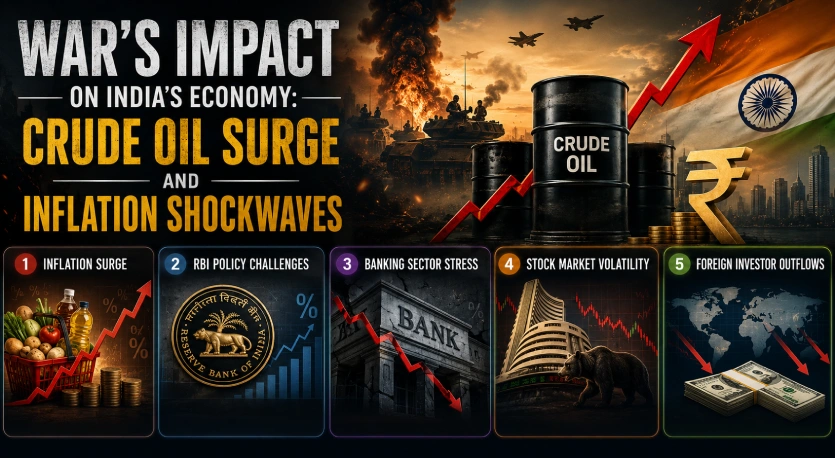
The ongoing conflict in the West Asian countries is influencing the Indian market like no other. We might not be facing a war situation, but inflation is hitting us hard and unpredictably. The crude oil prices are surging, leading to the shockwaves of inflation. For India, which is a country that imports a majority of its energy requirements, the situation has become all the more difficult. With the Strait of Hormuz blocked, the cost of living, as measured by the wholesale price index, reached its peak at 8.3%. In just over 42 months, by April 2026, making our countries vulnerable to rising inflation and the costs of daily living.
Such a sudden increase in energy costs is altering India’s economic climate, with the financial and economic sectors taking a heavy hit. This can be seen through the policy issues facing the Reserve Bank of India, leading to increased input costs in industries and logistics. Let’s see its influence on India’s financial and commercial sectors, and then the wholesale inflation of April 2026.
Impact on the Financial Sector Due to the Surging War
The surging war in the West has shown the vulnerability of the Indian market due to foreign dependence on goods and minerals. With the conflict going on in April 2026, India’s financial sector is facing trouble on many sides and has experienced difficulties.1. Inflation surge
The major inflation surge is driven by the surge in crude oil prices, which have risen by about 88%. At the same time, some high or low rates have increased across the board, driving overall inflation higher. Because the wholesale inflation measures at 8.3% in April 2026.2. RBI Policy Challenges
RBI is trying to find a balance, but it’s putting pressure on the policy and raising some challenges in the market. Making it difficult to balance inflation control vs. growth.3. Banking Sector Stress
Due to the increased market rates, inflation, and rising rates, liquidity is tightening again, and banks are in a tough position, too. As the situation is leading to higher borrowing costs for everyone.4. Stock Market Volatility
Equity markets have already lost over ₹17 trillion in value within two trading sessions, reflecting investor anxiety. It is causing investors to pull money from the market and making our market unstable.5. Foreign Investor Outflows
In the investment market, stability is uncertain, but with the geopolitical war situation, it has become even more so. Now the risks have doubled and are sending ripples through the market, making foreign investors doubt.Influence on the Commercial Sector
Commercial activities have incurred increased costs directly. The manufacturing inflation went up to 4.62%. It is mostly impacting chemicals, basic metals, and textiles. The rise in input prices is eating into companies’ margins and making it difficult for them to raise prices for their customers. The transport and logistics sector faces challenges from increases in petrol inflation by 32.4% and diesel inflation by 25.19%, which are raising freight costs. Commercial LPG inflation at 10.92% is affecting hotels and restaurants as well as industries. The trade deficit has been rising due to imports of crude oil.| Category | March 2026 (%) | April 2026 (%) | Notes / Impact |
|---|---|---|---|
| Overall WPI Inflation | 3.88 | 8.3 | 42‑month high, driven by crude oil |
| Crude Petroleum & Natural Gas | 35.98 | 67.18 | Major driver of inflation |
| Crude Petroleum Alone | 51.57 | 88.06 | Sharpest spike |
| Fuel & Power (overall) | 1.05 | 24.71 | Pass‑through effect from crude |
| Petrol | 2.5 | 32.4 | Transport costs rising |
| Diesel | 3.26 | 25.19 | Freight costs increasing |
| LPG (Liquefied Petroleum Gas) | -1.54 | 10.92 | Commercial LPG inflation |
| Primary Articles (overall) | 6.36 | 9.17 | Led by minerals & non‑food |
| Minerals | 3.22 | 12.15 | Mining sector costs |
| Non‑Food Articles | 11.5 | 12.18 | Cotton, oilseeds, etc. |
| Manufactured Products (overall) | 3.39 | 4.62 | Factory‑gate prices rising |
| Chemicals & Chemical Products | 2.19 | 5.09 | Petrochemical feedstock costs |
| Basic Metals | 4.01 | 7 | Steel, aluminium inflation |
| Textiles | 4.91 | 7.3 | Input cost pass‑through |
| Cement, Lime & Plaster | 1.07 | 2.38 | Construction sector |
| Food Index (overall) | 1.85 | 2.31 | Relatively contained |
| Food Articles | 1.9 | 1.98 | Stable compared to energy |
| Potatoes | -30.04 | -30.04 | Deeply negative |
| Onions | -42.11 | -26.45 | Still negative, but moderating |
| Wheat | -4.6 | 0.38 | Turned positive |
| Overall WPI Inflation | 3.88 | 8.3 | 42‑month high, driven by crude oil |
| Crude Petroleum & Natural Gas | 35.98 | 67.18 | Major driver of inflation |
| Crude Petroleum Alone | 51.57 | 88.06 | Sharpest spike |
| Fuel & Power (overall) | 1.05 | 24.71 | Pass‑through effect from crude |
| Petrol | 2.5 | 32.4 | Transport costs rising |
| Diesel | 3.26 | 25.19 | Freight costs increasing |
| LPG (Liquefied Petroleum Gas) | -1.54 | 10.92 | Commercial LPG inflation |
| Primary Articles (overall) | 6.36 | 9.17 | Led by minerals & non‑food |
| Minerals | 3.22 | 12.15 | Mining sector costs |
| Non‑Food Articles | 11.5 | 12.18 | Cotton, oilseeds, etc. |
| Manufactured Products (overall) | 3.39 | 4.62 | Factory‑gate prices rising |
| Chemicals & Chemical Products | 2.19 | 5.09 | Petrochemical feedstock costs |
| Basic Metals | 4.01 | 7 | Steel, aluminium inflation |
| Textiles | 4.91 | 7.3 | Input cost pass‑through |
| Cement, Lime & Plaster | 1.07 | 2.38 | Construction sector |
| Food Index (overall) | 1.85 | 2.31 | Relatively contained |
| Food Articles | 1.9 | 1.98 | Stable compared to energy |
| Potatoes | -30.04 | -30.04 | Deeply negative |
| Onions | -42.11 | -26.45 | Still negative, but moderating |
| Wheat | -4.6 | 0.38 | Turned positive |
Final Words!
The current situation in West Asia, with the consequent rise in crude oil prices, has put considerable pressure on India’s economy. The fact that wholesale prices have soared up to 8.3% in April 2026 indicates that the economy of a country. Showing that it depends extensively on foreign sources of energy, making it vulnerable. The rising prices of energy and fuel are impacting the economy of the country, putting a tough call on the policymakers. At the Reserve Bank of India, despite the volatile market. Alongside, the various sectors are experiencing increased costs in the manufacture, transportation, and consumption of their products and services. Although food inflation has been controlled thus far, the threat of its spread persists.FAQs
Why did India’s wholesale inflation rise to 8.3% in April 2026?
Inflation is driven by the ongoing war in the east, which has resulted in a surge in crude oil and fuel prices in India.
How is the surge in crude oil prices affecting India’s financial sector?
The surge in crude oil is causing inflation in the Indian market and is putting pressure on the RBI policy. It raises borrowing costs and triggers market volatility.
What’s its impact on the commercial sector?
The commercial sector is getting influenced as manufacturing, transport, and consumer goods face higher input costs.
What’s the government's action amid these fuel price hikes?
The government is shielding the price hikes, retail petrol/diesel prices are stable, but LPG and commercial fuel costs are rising.
What is the long-term risk if crude prices remain high?
The risks contain the fiscal deficit widening, corporate margin compression, and possible retail fuel hikes if it’s continued like this. Without any changes.