
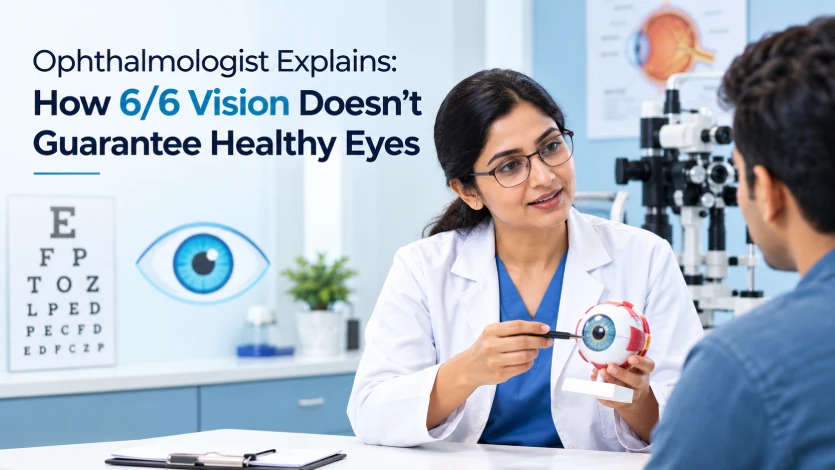
Our eyes are the most important part of our whole day that allows us to function efficiently and work with precision. It’s because we can see properly that we move with precision. However, with the rising digital generation who spend almost all day in front of a screen, moving from laptops to smartphones to tablets. Our eyes have never been more vulnerable to diseases, and the rising cases of vision loss or degradation have been proving it right. Now, eye specialists have finally confirmed that not only is vision loss addressed, but some can occur in the dark without being identified.
Many eye experts have confirmed that these conditions grow in the shadows without affecting people’s vision or causing any symptoms. This has been an eye-opener for people who thought that just because they have 6/6 vision, they are safe. Because it indicates that seeing perfectly doesn’t guarantee you are disease free properly, rather it’s damaging your eyes slowly. Therefore, going for an eye checkup is more than a test for spectacles.
What Are Eye Conditions That Attack Silently Without Visible Symptoms?
There are three highly influential diseases that affect people’s vision. Having an understanding of how they happen and what they look like can help you make the ideal decision about eye checkups.
1. Glaucoma
It’s the most common condition that most people have. Also called the thief of the eye is called this because it damages the optic nerve, which is crucial for good vision. It slowly damages the optic nerve, and the early stages don’t reveal any symptoms to the person, keeping them uninformed. This causes peripheral vision to deteriorate while the central vision stays intact, not hindering people from doing their day-to-day activities.
The 2026 systematic review stated that people aged above 40 have a 3.23% prevalence, while this will rise to 4.52% by 2040.
2. Diabetic Retinopathy
Diabetic retinopathy is another disease that can grow without being noticeable or showing any symptoms in its early stages. Suffering from consistently high blood sugar causes this by damaging the small blood vessels that supply the retina. Causing swelling, leakage, or abnormal blood vessel growth, and while all this happens, the person’s vision remains normal until the last stage.
As diabetes becomes quite common in society, opting for regular retinal evaluation should be a part of diabetic people’s eye care. Going for eye checkups and precaution for cholesterol, blood glucose, and blood pressure to keep them at normal levels is vital. All these can help in early detection of retinal changes and hence can lower the risk of visual impairment.
3. Early Age-Related Macular Degeneration (AMD)
In the early stages of AMD, it never causes any noticeable vision problems, staying in the shadows. These subtle retinal changes are only detected through a detailed examination, which people with good vision avoid. It’s important to have early detection of this because it allows careful monitoring and timely intervention.
What’s the Importance of Routine Eye Checkups
Assuming that visiting the ophthalmologist becomes mandatory once someone starts observing changes in their vision could prove to be a costly decision. Numerous critical ocular disorders might develop undetected over decades without producing any symptoms at all. Some reasons make routine eye exams very crucial, and these are mentioned hereunder.
- Beyond Refractive Error Testing: The purpose of an eye examination is beyond assessing someone’s visual acuity through reading charts; rather, it includes evaluating overall ocular well-being.
- Structural Evaluation: Professionals perform specialized testing for measuring eye pressure, examining optic nerves and retina, assessing peripheral vision, and obtaining images of microvascular changes.
- Addressing Critical Risk Factors: Diabetic patients must ensure regular retinal screenings besides managing their glucose levels. Older individuals and those having genetic predispositions for conditions such as glaucoma require more rigorous screening.
Concluding Note!
The assumption that only visual impairment can predict eye diseases is quite wrong, since there are certain eye disorders. In which you will suffer no initial symptoms, including glaucoma, diabetic retinopathy, and macular degeneration, among others. In other words, when your vision starts deteriorating, it is too late to prevent the structural damage done to either the optic nerve or the retina. Therefore, leaning towards awareness by going on frequent eye checkups and keeping up with specialists’ preventive suggestions keeps your eyes healthy.
In order to protect your eyesight, getting comprehensive eye examinations should be included in your health care program regularly. The screening will help assess the internal structure of the eye, which goes way above visual acuity test. Detecting these eye problems at an early stage and receiving appropriate medical treatment should serve as the perfect strategy. You must visit your doctor regularly for eye checkups, as this blog explains.
FAQs
What do regular eye checkups include?
It includes the examination of the cornea and ocular surface, assessment of dryness level and tear film, and detection of glaucoma through intraocular pressure. Additionally, evaluation of the optic nerve and detailed examination of the retina is also conducted.
What are the experts' rules to maintain the eyes' moisture and avoid strain?
The most talked exercises stated that implying the 20-20-20 rule, without fail. It states that after every 20 minutes, stare at something 20 feet away for 20 seconds. Additionally, staying hydrated and deliberate blinking can help maintain the tear film.
What are some of the eye threats due to screens?
Some major symptoms are burning or irritated eyes, blurred or fluctuating vision, mild headaches, difficulty in focusing, and dryness and redness in the eyes. It happens because the screen changes how the eyes function and also causes a 50% drop in people’s blink rate.
How should I protect my eyes and lean toward active recovery?
Sleeping is one of the vital things to do, as our eyes recover during sleep. On the other hand, while awake, use protective sunglasses of good quality to reduce strain.