
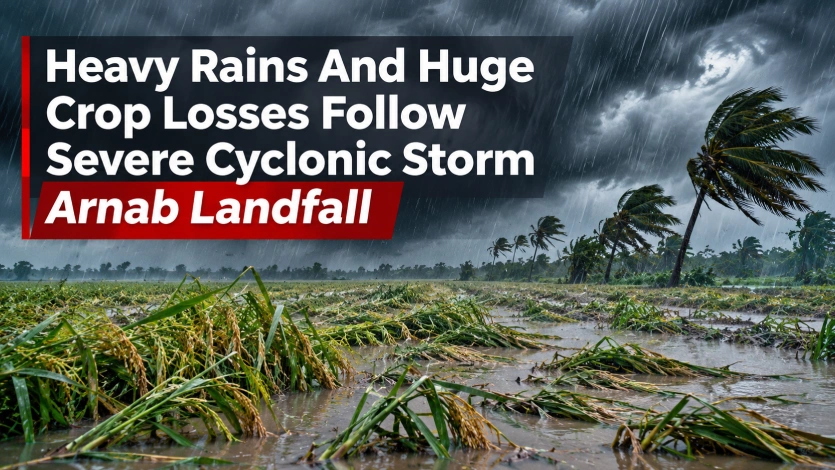
The coastal areas are now facing severe cyclonic storm Arnab, which has made a catastrophic landfall in the region. Andhra Pradesh and Odisha have seen a serious setback because of the heavy winds blowing at the speed of 140 kilometers per hour and affecting several districts along the coast. Besides the heavy rainfall associated with the weather phenomenon, it caused significant disturbances in day-to-day activities, resulting in large-scale evacuations. Meanwhile, rescue missions have begun helping people stranded in the affected area while keeping an eye on the erratic movement of this catastrophic event.
While assessing the aftermath of severe cyclonic storm Arnab, it is seen that huge destruction occurred in the agricultural region. According to officials, more than 80,000 hectares of vital crops have been destroyed only in Andhra Pradesh. However, the intense weather phenomenon gradually subsided and became a deep depression. Yet the possibility of flooding in the next few hours continues to remain very high. Considering all this, the citizens of both states have been advised by the government to stay indoors. On the other hand, the government has made it clear that the facilities of electricity and communication will be restored soon.
Monitoring The Immediate Government Rescue And Emergency Relief Operations
India’s Meteorological Department kept a constant vigil over the severe weather conditions, which were advancing toward the eastern coast. The meteorologists released red alerts repeatedly, alerting the concerned administrations regarding the catastrophic situation. While the government officials from other states are releasing massive support for the people in need. These highly skilled rescue forces pre-stocked essential aid supplies and vessels for rescuing stranded individuals once the conditions allowed them to initiate action.
The unending rain brought about massive flash flooding in several low-lying villages soon after the storm had passed the coast. The incessant rains led to the collapse of the embankments and flooding of many residential areas, which made movement very difficult. The concerned authorities continued working around the clock to clear the jammed roads. Efforts were made for restoring the lines of communication and electric networks in order to give medical assistance to the rural areas.
Five Major Impacts Of The Devastating Cyclone
The devastating landfall of severe cyclonic storm Arnab left a massive trail of destruction across the eastern coastline. This sudden storm has caused considerable damage. This includes damage to agriculture and infrastructure. Here are the five major impacts caused by the cyclone in Andhra Pradesh and its nearby coastal areas.
1. Massive Agricultural Devastation
Heavy rains and gusts of wind resulted in damage to the agricultural produce of the region. As per the initial reports, the floods affected more than 80,000 hectares of farmland in the state of Andhra Pradesh.
2. Fierce Wind Destructions
Cyclones cause major destruction, with the 140-kilometer-per-hour strong winds they bring making the people on the coast suffer massively. Gale-force winds mercilessly felled several century-old trees and flattened frail houses, along with the sturdy concrete electricity poles located within these isolated communities, plunging them into darkness.
3. Widespread Evacuation Efforts
Disaster management authorities evacuated hundreds of thousands of people prone to natural calamities to safer locations in cyclone shelters. Through this precautionary measure, human losses were greatly reduced, and very few were registered, although those lives lost were crucial. The safety team ensures that families are moved to safer areas with safety measures to protect them.
4. Extensive Infrastructure Damage
Heavy rain and storms disrupted activities as cities and districts remained waterlogged, and several trees fell. Flooding disrupted transport connectivity, rendering roads inaccessible, thereby impeding speedy transportation of relief materials like medicines and food items to victims stranded in different parts of the state.
5. Weakening Weather System
Following its destructive coastal landfall, the intense weather phenomenon slowly lost its momentum while moving inland. The regional meteorological department officially confirmed the system gradually weakened into a deep depression, though they maintained strict warnings regarding persistent heavy rainfall alerts.
Detailed Meteorological And Damage Assessment Summary
Evaluating the regional devastation clearly demonstrates the massive scale of this unprecedented natural disaster. Local administrations are actively compiling damage reports to distribute necessary financial relief to affected citizens. Review the detailed meteorological and impact summary table below to understand exactly how this powerful weather system completely disrupted coastal communities across eastern India during the recent storm crisis.
| Category Metric | Cyclone Impact Details |
|---|---|
| Maximum Wind Speeds | Ferocious winds battered the coastline at an alarming hundred forty kilometers per hour. |
| Agricultural Crop Loss | Over eighty thousand hectares of vital farmland faced complete destruction across Andhra Pradesh. |
| Evacuation Statistics | Thousands of vulnerable citizens were safely relocated to fortified emergency government storm shelters. |
| Primary Affected States | Andhra Pradesh and Odisha experienced the most severe infrastructural damage during the initial landfall. |
| Current Weather Status | The intense weather system eventually weakened into a deep depression while moving steadily inland. |
| Transportation Disruptions | Major regional highways suffered extensive waterlogging, temporarily halting essential commercial and civilian vehicular movement. |
| Emergency Relief Forces | National disaster response units deployed rapidly to restore crucial power and telecommunication network lines. |
| Future Rain Warnings | Meteorologists issued continuous heavy rainfall alerts for neighboring districts despite the system losing strength. |
| Structural Roof Damage | High-velocity winds ruthlessly destroyed fragile residential housing structures across the villages. |
Final Thoughts!
The process of rehabilitation following Severe Cyclone Arnab calls for large-scale cooperation among both state and central disaster management agencies. Although the immediate hazard has transformed into a depression, displaced individuals still need sustained provision of potable water sources, healthcare services, and shelters until the situation stabilizes. Local governments are actively raising relief aid money to compensate local farmers for their crop devastation caused by the extreme weather event. This includes reconstructing the coastal regions destroyed due to the cyclone in the city on Wednesday.
The government and administration have to play a bigger role to bring the normal lives of people at the coastline back to normal. But what happened during Severe Cyclone Arnab clearly shows us how quickly Mother Nature can change her mind, making it evident why it is imperative to strengthen early warning systems and develop extremely robust coastline infrastructure in advance. Otherwise, people will continue suffering due to exposure to harsh weather conditions and natural disasters in the future.
Frequently Asked Questions
Where did the effects of this storm hit the worst?
The fierce natural disaster has wreaked havoc mostly on the coasts of both Andhra Pradesh and Odisha. Both the states witnessed brutal gales accompanied by heavy rains, resulting in infrastructure damage as well as loss of agricultural produce.
What was the wind speed experienced during the storm?
At the very start of the storm, it was seen that the wind speed experienced was quite ferocious and reached up to one hundred and forty kilometers per hour. The fierce winds tore out the big trees along with completely demolishing the delicate buildings in just a few seconds.
What is the level of damage to agriculture?
According to the initial estimates made by the government, more than eighty thousand hectares of growing crops were wiped out only in the state of Andhra Pradesh. This damage has caused a lot of financial hardship to many of the farmers in these areas.
Were there any rescue operations undertaken before the occurrence of the storm?
There were some rescue efforts undertaken before the storm, in which people in danger zones were removed from vulnerable areas and shifted to government shelters.
What's the status of Cyclone Arnab and what's next?
The severe storm hit the Arunachal Pradesh coastline communities on Wednesday and caused severe destruction. But right now it has become a deep depression, and the authorities have continued to issue alerts to stay at home and stay safe.