
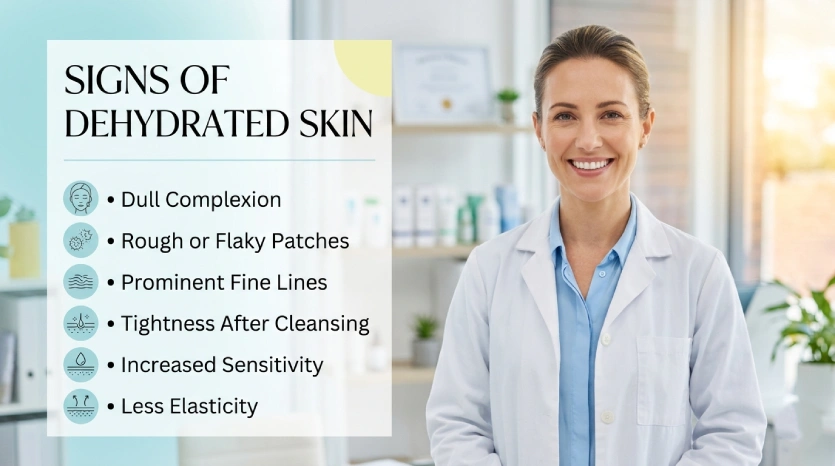
Summer is approaching, and with it comes dehydration, which is most evident on our skin before we feel it physically. While juggling numerous types and materials and trying all kinds of skincare to fix it, we forgot the most basic solution. Being hydrated, drinking enough water, and eating foods rich in water content. With the extremely hot weather due to the blazing sun, humidity, and pollution, the skin faces much more trouble. Resulting in a weak skin barrier that can be prevented by intaking the suggested amount of water.
You can use the dehydration evident on the skin to your advantage by monitoring it and taking preventive measures. You can prevent your skin, physical health, and overall well-being from worsening through strategic, tactical care. A timely treat is always better than regretting it later on, trying to change your whole lifestyle, and taking medicines. The blog explores dermatology-recommended clear signs to identify skin dehydration. Prevention measures and many more.
Dehydration: Its Causes, Problems, and Expert Take On It
Dehydration is a common concern during the summer, as excessive sweating and the burning sun can quickly leave you feeling dizzy. However, the impact doesn’t just affect you internally or physically, instead it’s visible externally on your skin. As our skin barrier is a sensitive part, dehydration can enter a more critical phase, showing effects early on. You can see fine lines, dryness, skin tightening, and a visibly tired face all the time.
As experts have noted, dehydration is a broader term that affects us more than we realize. The loss of fluid from our body has multiple manifestations, and understanding it can help us identify it early, especially during the summer. In general, our skin has many concerns, from different skin types to sensitive, acne-prone skin, and aging issues. Making it hard to recognize dehydration symptoms, as they may overlap, although it is imperative to recognize them early. As per a highly qualified dermatologist, the type of water loss is called “transepidermal water loss.”
The transepidermal water loss is caused by extreme temperatures, sweat, and prolonged exposure to sunlight, resulting in dehydrated skin. This directly impacts your skin barrier, making it fragile and prone to reacting and being damaged. Additionally, a dermatologist cleared up doubts about different skin types, stating that dehydration affects people with oily skin in the same way it does others. Elaborating, she stated that no skin type is immune to dehydration, including oily skin, and that even oily skin can be dehydrated despite feeling oily.
Signs of Dehydrations on Skin
Let’s look at the signs that dermatologists listed to identify dehydration on the skin. As we understand it, it affects every skin type and age and creates problems within our system.
- Tightness on skin after cleansing
- Tired-looking face and skin
- Lack of hydration of the stratum corneum, resulting in prominent fine lines around the eyes and mouth.
- Increase in skin sensitivity because of barrier impairment.
- Skin becomes more itchy and reactive.
- Redness and stinging sensation from skincare products.
- Uneven and irregular skin texture.
Let’s look at some of the prominent ones in more detail.
1. Dull Skin
The skin starts to appear flat, as dull skin lacks moisture, losing the brilliance and shine of healthy skin that glows radiantly. It’s most commonly recognized and is highly evident to you and those around you.
2. Fine Lines on Face
Wrinkles are a natural symptom that shows on the skin with age, and they’re also caused by skin exposure and heredity. These can’t be treated with any amount of water. However, extremely fine lines, or those that have started to appear early, can be caused by dehydration. More moisture from water and good cream can help plump the skin, making faint wrinkles vanish.
3. Itching and Reactive Skin
Itching, redness, or easily reactive skin is severely dehydrated, which you can also feel, as it seems dry to the touch. Dehydration causes skin fissures, which are itchy and can also allow germs to enter the skin.
4. Sunken Eyes
The other corn sign from your skin is dark patches beneath your eyes, although it’s common due to lack of sleep. However, if it’s persistent despite good sleep, it may be due to a lack of moisture around your eyes, which can cause the skin to peel away from the eye sockets. Resulting in a sunken look or with dark eye patches.
One prominent way to check for dehydrated skin is the pinch test. You need to pinch the little part of your skin on your arm between your thumb and forefinger. If it returns to its normal position within a few seconds after you release it, you are well hydrated. Otherwise, it’s time to take a gulp of water and maintain the frequency.
Tips From Experts For Managing Your Dehydrated Skin
A dermatologist has recommended some ways that can be a big help in restoring your dehydrated skin to moisture, plumping it. You can check out the table below for all this: it covers everything from basic hydration to other product recommendations and dietary suggestions.
| Aspect | Key Recommendations | Notes |
|---|---|---|
| Hydration Basics | Drink at least 8 glasses (~2 liters) of water daily | Needs vary with climate, activity, and health status |
| Precise Fluid Requirement | Calculate: 35 ml per kg body weight | Example: A 60 kg person needs ~2.1 liters/day |
| Adequate Fluid Intake | Ensure sufficient water and fluid-rich foods | Supports systemic hydration and skin balance |
| Humectants | Apply hyaluronic acid, glycerin | Attract and retain water in skin layers |
| Barrier Repair Ingredients | Use ceramides, panthenol, and niacinamide | Strengthen skin barrier and reduce transepidermal water loss |
| Gentle Cleansing | Choose mild, non-stripping cleansers | Prevents further barrier damage |
| Sun Protection | Apply broad-spectrum sunscreen | Prevents UV-induced water loss and barrier breakdown |
| Exfoliation Control | Avoid over-exfoliation | Excess exfoliation spikes water loss and irritation |
| Lifestyle Hydration | Limit caffeine/alcohol, maintain a balanced diet | Reduces systemic dehydration risk |
Wrapping It Up!
Being hydrated is essential, as water comprises around 60% of total body weight and is the major component. Therefore, maintaining it requires genuine effort and is also crucial so you can prevent yourself from dehydration. Proper hydration primarily promotes skin cell turnover, which helps our skin look fresh and youthful. Because of dehydration, the body retains extra water as a defensive mechanism, causing puffiness. Therefore, stay hydrated, as it minimizes puffiness, particularly around the eyes, which people spend thousands of rupees trying different creams for.
Keep drinking water as per the suggested guidelines, as summer approaches and the weather changes. The sun has been blazing, and extreme heat can cause dizziness and other problems. Being protected and staying connected with Organs Beauty for such experts’ recommendations.
FAQs
How is hydration important for skin health?
Drinking an adequate amount of water can help improve skin tone, giving you plump, glowing, radiant skin. It also improves skin texture and enhances a vibrant appearance, prompting skin elasticity.
How much water intake should an individual consume in a day?
As recommended by experts, a general baseline for any individual is to drink at least 8 glasses, making it approximately 2 liters a day. While it can vary for individuals who go to the gym and exercise heavily, they have to compensate for the fluid lost through sweat.
What are some other easy ways to improve hydration in the body?
Some effective ways include taking jeera water, ajwain water, mint water, buttermilk, coconut water, and lemon water. They help improve hydration so your skin can radiate a natural glow.
What are some extreme signs of dehydration besides dry, itchy skin?
Some of the most noticeable ones include headaches, a dry, sticky mouth, decreased urine output, hard stools or constipation, fatigue, weight gain, and weakness.
How does the skin use the water?
Watermarks the 30% of the outermost layer of skin, and adequate water is essential for the skin to protect itself. It provides a protective barrier against environmental exposure and physical injury. Strengthens the skin barrier to help the body retain water and produce sweat when the body needs to cool down.