
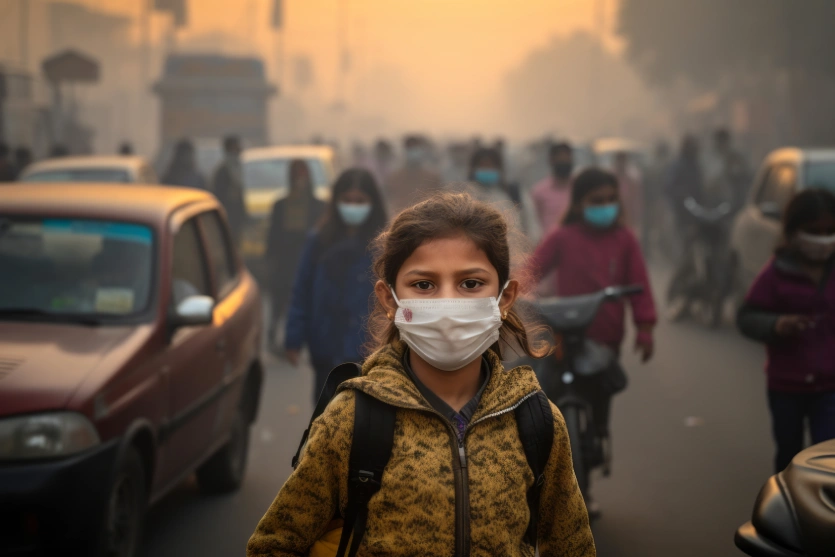
The capital of India is facing many issues, one of the top being the Delhi AQI. With each day passing, the AQI is increasing, causing harm to every person while they breathe. Over the span of 3 years, Delhi has reported over 2 lakh respiratory illnesses, and the major reason is the air quality. And we can’t just blame the winter for this surge in the AQI rate, and rest assured, thinking that it will drop back to normal after the season ends. However, the fog and smoke do make a small contribution, as they trap the poisonous air by making it heavier. And the wind rate is slow cause it’s winter, making it hard to scatter the harmful particles.
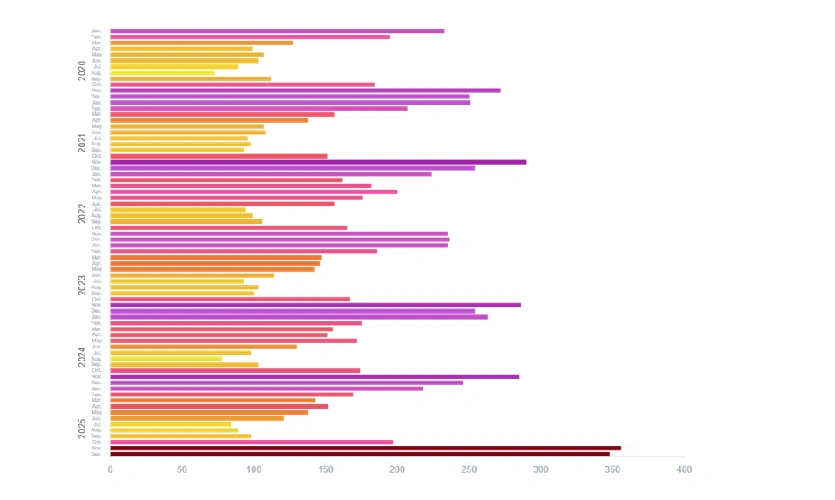
The recent report from top hospitals like AIIMS, Lady Hardinge, Ram Manohar Lohia, National Institute of TB and Respiratory Diseases, and Vallabhai Patel Chest Institute. Shows that the severe AQI has resulted in around 67,000 to 69,000 cases related to respiratory diseases. Which had landed directly in the emergency departments each year from 2022 to 2024. A notable issue arises as the number of patient admissions increases by 10819 in 2024. Every year, while the monsoon and summer seasons have moderate pollution, the winter brings noticeable change. As the AQI often jumps into the category of severe to very poor, this might be the reason for significant health issues across the capital. Here’s some data from AQI.in from 2020 to 2025, showing the fluctuations in AQI.
Why The City Is Covered in Smoke Suddenly, and How Does It Affect Us
As per the reports above, fog and sudden spikes in AQI have been observed in recent years in winter. However, the AQI in Delhi is not influenced only by the winter season, meteorological conditions also play an equal role. On normal days, when the humidity is moderate, the air flows normally, scattering air particles everywhere and not trapping air and pollutant particles. But now, when the wind is slow and humidity has risen, this has worsened the air quality as harmful particles are trapped by a layer. As the fog has formed a layer in the sky, trapping air particles due to humidity, it makes it hard for pollutants to be carried away to another region. The air pollutants like PM2.5 and PM10 are the most harmful particles that are trapped in the thick layer, resulting in an AQI spike.
These harmful particles are continuously emitted from urban sources, including vehicular traffic, construction activity, road dust, industrial operations, and regional transport of pollutants. To sum it up, a few contributions come from temperature inversion and humidity. At the same time, air pollution is already the top concern in Delhi.
Harmful Air Particles That Are Deteriorating Our Health
Air pollutants & Factors that are affecting our health as we breathe in everyday life.
- PM & PM10 – These small air particulates present in the air enter our lungs, harm breathing, and affect our heart and cardiovascular health.
- CO2 – originates from people in the surrounding ventilation in a closed space. This reduces focus productivity and harms cognition.
- VOCs – Come from materials, equipment, personal care products, and cleaning agents. This can irritate the eyes, nose, and throat.
- Ozone – By-products released from equipment like printers and copiers irritate our lungs and worsen existing conditions.
- Humidity – Indoor level varies based on design, occupancy, and weather
- Temperature – Regulated by HVAC systems, weather, and heat from equipment and occupants. This affects mood, focus, and productivity and increases the risk of heat illness.
- Noise – Raises stress, hampers focus, and affects mental health.
Various Diseases Caused By Air Pollutants in People
Overall health is affected just by breathing in poor air quality, especially in Delhi’s high AQI. Here are the two categories in which the diseases are divided to provide a clear picture of their effects on people who breathe in this air.
1. Short-Term Health Effects
Eye, nose, and throat irritation: Air pollutants irritate the eyes, nose, and throat, causing symptoms such as watering, redness, burning, and sneezing.
Respiratory Problems: Problems like coughing, shortness of breath, and chest tightness are caused by air Pollutants that irritate our airways & lungs.
Cardiovascular Problem: The risk of heart attacks, strokes, and other cardiovascular events increases even with short-term exposure to air pollution.
Headaches: Air pollutants that cause headaches include PM2.5, NO2, and O3, which irritate the lining of the throat and nose.
2. Long-Term Health Effects
Chronic Respiratory Diseases: Air pollutants damage the lungs, which leads to chronic respiratory diseases such as chronic obstructive pulmonary disease (COPD) and lung cancer.
Other health problems: Air pollutants don’t just harm our respiratory system. They also cause various health problems, including diabetes, reproductive problems, and neurological problems.
Here’s a tabular data set that shows the average AQI over the year and how it has increased to reach this point.
| Year | Average AQI | Change vs Previous Year | Trend |
|---|---|---|---|
| 2020 | 162 | — | Baseline |
| 2021 | 174 | 0.07 | Rise (Worsened AQI) |
| 2022 | 164 | -6% | Fall (Improved AQI) |
| 2023 | 169 | 0.03 | Rise (Worsened AQI) |
| 2024 | 169 | 0% | No Change |
| 2025 | 169 | 0% | No Change |
The Government Action to Tackle This Hazardous Problem
The Delhi government has finally decided to take action and implement the AQI control policies, starting on December 17th. The major policies introduced by the government are GRAP-4, the No PUC rule, the No fuel rule, and BS-VI-compliant vehicles. Let’s see them briefly.
1. No PUC, No Fuel
The PUC stands for Pollution Under Control certification, and the government has made it clear by invoking these rules. No fuel will be provided by the petrol pumps across Delhi without a PUC certificate. This rule will allow the immediate removal of high-emission vehicles from service, and the traffic police team has started monitoring the checkpoint. To enforce this rule, violators are charged with a fine. The control of the use of worn-out vehicles is an essential step in controlling air quality. As the pollution from these vehicles contributes up to 40% of PM2.5 levels during winters.
2. BS-VI Compliant Vehicles
In this entry of non-Delhi-registered vehicles that do not follow the norms up to BS-VI have been banned. Only BS-VI-compliant vehicles that meet the latest emission standards are allowed to enter. This restriction is made to prevent the transboundary pollution from the NCR region, where older, more polluting vehicles often cross into Delhi.
3. Graded Response Action Plan
The GRAP-IV is the strictest stage of Delhi’s anti-pollution framework, implemented only when the AQI reaches the severe zone. The rule states these key measures:
- 50% Work-From-Home mandate for government and private offices.
- Ban on construction activities and compensation for affected workers.
- Hybrid learning mode for Classes 6–9 in schools.
- Restrictions on truck entry carrying construction material.
The plan has been implemented region-wide, including nearby areas such as Noida, Gurgoan, and Faridabad, to ensure coordination across the NCR.
Lastly, the Chinese Embassy in Delhi suggested adopting measures from the Beijing pollution control model and highlighting the global concern over Delhi’s air crisis.
Concluding Note!
The Delhi AQI has hit the severe level, and it’s essential to surround ourselves with clean air and breathe in quality air rather than poisonous air. That led to many health problems and difficulties in day-to-day life. The government has started implementing policies to tackle the phenomenon, even though it’s a little late. Now, the people of India need to follow them strictly and support them in this journey.
Try to be indoors as much as possible, keep the windows closed, and when it’s important to go out, wear masks. Follow the rules and support the government to make our lives and the air better. For more such informative blogs, visit the Organs Beauty website.